Updated educational guidance prepared in October 2026. This text is newly written; it is not recovered wording from the former illustration.
Match the next step to the situation
Windshield damage deserves prompt assessment, with urgency guided by visibility, the damage and your vehicle’s instructions. If you are unsure whether the vehicle is safe, seek professional advice before attempting a repair or driving.
Put visibility and vehicle warnings first
If damage prevents a clear view of the road, do not set off; seek professional advice about assistance or transport. Follow any no-driving instruction in your vehicle’s manual. For example, Volvo’s 2023 V60 guidance says not to drive with structural windshield damage. A picture of a chip cannot confirm that such a warning does or does not apply.
Check the instructions for camera-related damage
The 2019 Ford Fusion manual calls for a prompt vehicle check if damage occurs around its Driver Alert sensor. It also says that windshield damage or a blocked camera may prevent that system from working. This is a vehicle-specific example, so use your own manual and tell the service provider about any warning message or damage near a camera. Do not treat the absence of a warning light as proof that damaged glass is safe.
Let inspection determine the work
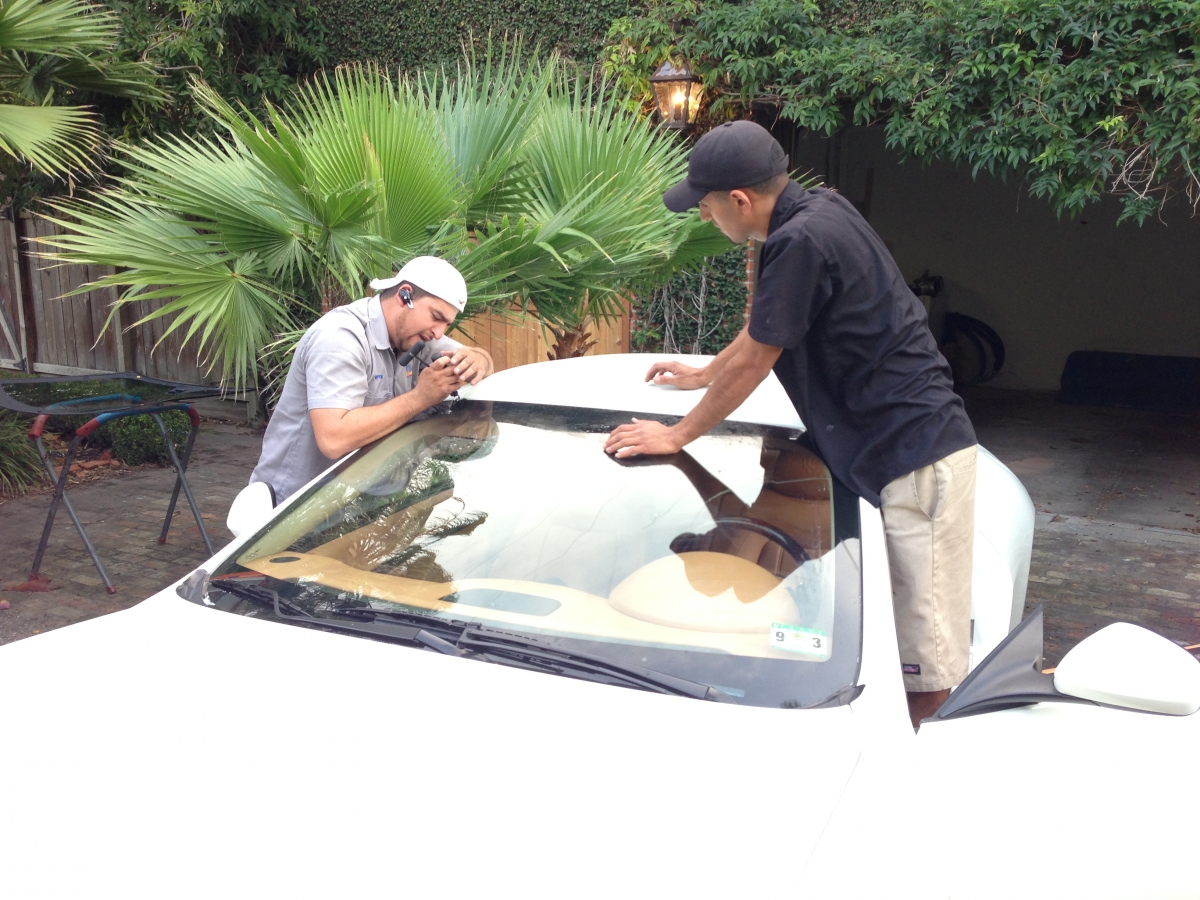
ROLAGS calls for checking both sides of the glass before deciding repairability and taking relevant vehicle features into account. Ask the professional to explain the recommendation and the appropriate next step before moving or working on the vehicle. Prompt attention means getting that assessment and following the applicable instructions; it does not guarantee an immediate repair appointment or a particular repair outcome.